Implementation Solutions
A solution is a documented implementation pattern that maps a real-world scenario — a school, law firm, clinic, agency, or enterprise — to the right anonymize.solutions deployment and configuration. Real-world scenarios for any organization — solo practitioners, small offices, or global enterprises. Schools, law firms, clinics, agencies, startups. Pick your complexity level, not your industry.
16 Solutions by Complexity
Same solutions work for a solo lawyer, a small clinic, a school district, or a Fortune 500. Pick your entry point based on technical needs. Each solution includes three detailed use cases.
- Website PII Scanner0 min — piisafe.eu: scan any URL, no registration, 60-second results
- Chrome Extension5 min — Install via MDM or manually, protect AI chats instantly
- MCP Server5 min — npm install, works with Claude Desktop, Cursor, VS Code
- AI Application Development1 hour — Chatbots, RAG pipelines, AI agents with PII protection
- API for Ticketing Systems1 hour — Webhook integration with any ticketing/CRM platform
- API for Event Platforms1 hour — Anonymize registration and attendee data
- Workflow Automation1 day — n8n, Make, Zapier pipelines with local AI
- File Share Encryption1-2 days — Batch process SharePoint, Dropbox, network drives
- Document Processing1-2 days — HR, contracts, any document collection
- Source Protection1 week — Custom key hierarchies, secure communication
- White-Label Integration1 week — Embed anonymization in your own product
- Healthcare Compliance2+ weeks — HIPAA preset, EHR integration, clinical trials
- Education Compliance2+ weeks — FERPA preset, research protocols, student data
- Legal Compliance2+ weeks — e-Discovery, M&A data rooms, privilege protection
- Financial Compliance2+ weeks — KYC/AML, trading data, PCI-DSS
- Insurance Compliance2+ weeks — Claims processing, underwriting, fraud detection
- Multi-Tenant PlatformEnterprise — Government, agencies, tiered access control
Each solution works with both detection engines. Use NLP for documents and conversations, Pattern for transactions and logs, or Hybrid for maximum coverage.
Enterprise File Share Encryption
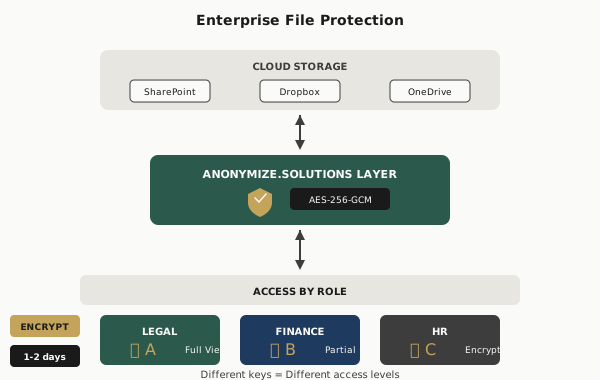
Solution: Use the Encrypt method (AES-256-GCM) with personal or shared encryption keys. Create custom entities and presets based on location, data format, and language. Deploy the Desktop App or API for batch processing, with Office Add-in or custom integrations for decryption.
1Legal Firm: SharePoint Document Library
Context
A multinational law firm stores case files, contracts, and correspondence in SharePoint Online. Documents contain client names, addresses, case numbers, and financial details across German, English, and French content.
Implementation
- Deploy anonymize.solutions API integrated with SharePoint via Power Automate or Azure Logic Apps
- Create custom presets for legal documents: client names, case IDs, court references, opposing counsel
- Configure language-specific entities for DE/EN/FR jurisdictions with locale-aware date formats
- Apply AES-256-GCM encryption on upload; encrypted tokens replace original PII
- Share encryption key via Azure Key Vault or manual distribution to authorized partners
- Partners use Office Add-in to decrypt and view original values in Word/Excel
Use Cases
- External counsel reviews encrypted case files; decrypts only with shared key
- Paralegals process documents without seeing client PII
- Audit trail maintains encrypted versions for compliance
Try File Encryption Live
Encrypt documents with AES-256-GCM before cloud storage:
2Healthcare Provider: Dropbox Business
Context
A medical practice shares patient referral letters and lab results with specialists via Dropbox Business. HIPAA compliance requires PHI protection, but referring physicians need access to original data.
Implementation
- Use Desktop App with HIPAA preset (18 PHI identifiers) for batch encryption
- Configure custom entities: medical record numbers, insurance IDs, diagnosis codes (ICD-10)
- Encrypt documents locally before Dropbox sync; files never leave machine unencrypted
- Generate department-specific keys: Cardiology, Radiology, General Practice
- Specialists receive key via secure channel; decrypt using Desktop App locally
- Original files auto-delete after 30 days; encrypted versions retained for records
Use Cases
- Radiologist decrypts imaging reports with Radiology key
- Billing department processes claims with financial data encrypted separately
- Research team analyzes anonymized data without decryption capability
3Enterprise CRM: Salesforce & Business Central
Context
A B2B company syncs customer data between Salesforce CRM and Microsoft Business Central ERP. Sales reps need full customer details, but finance and logistics see only encrypted identifiers.
Implementation
- Deploy API middleware between Salesforce and Business Central
- Create role-based presets: Sales (no encryption), Finance (encrypt names/addresses), Logistics (encrypt all PII)
- Encrypt customer PII with organization master key derived via PBKDF2
- Store encrypted tokens in custom fields; original data in secured Salesforce fields
- Finance team uses custom CRM module with decryption API calls for authorized access
- Audit all decryption requests with user ID, timestamp, and purpose
Use Cases
- Sales rep views full customer profile in Salesforce
- Finance analyst sees encrypted customer name but full invoice amounts
- Warehouse staff processes orders with encrypted recipient details
- GDPR subject access requests fulfilled via audit log
Website PII Scanner — piisafe.eu
Best for: Pre-launch privacy audits, GDPR compliance checks, vendor risk assessments, and EU AI Act documentation scanning.
Pre-Launch Privacy Audit
0 min setupChallenge: Before going live, a development team needs to verify that no PII leaked into staging — test data, debug endpoints, or form echoes exposing real user data.
Solution: Scan the staging URL with piisafe.eu using the GDPR or HIPAA preset. Review detected entities by page. Export HTML/CSV audit report as documentation for the DPIA.
- Scan up to 10 pages per run (free tier)
- GDPR, HIPAA, PCI-DSS, CCPA presets included
- Export audit report for compliance documentation
- No credentials or registration required
Third-Party Vendor Risk Assessment
0 min setupChallenge: A DPO needs to assess whether a third-party vendor's public-facing website leaks customer PII — part of GDPR Article 28 due diligence.
Solution: Use piisafe.eu to scan the vendor's public pages. Document findings in the exported report. Include in the vendor risk register and DPA review.
- Scan any public URL — no access to vendor systems needed
- 320+ entity types across 70+ countries
- Export JSON/CSV for vendor risk register integration
- Repeat scans monthly for ongoing monitoring
EU AI Act Documentation Audit
0 min setupChallenge: An AI product team must verify that publicly accessible technical documentation (model cards, data cards, README files on GitHub Pages) contains no PII before the August 2, 2026 EU AI Act enforcement deadline.
Solution: Scan documentation URLs with piisafe.eu using the EU AI Act preset. Fix any PII exposure. Export the audit report as evidence for Article 11 technical documentation compliance.
- EU AI Act Article 10 preset — scans for training data PII
- Audit trail export for Article 11 technical documentation
- Enforcement deadline: August 2, 2026
- Free tier sufficient for most documentation audits
Chrome Extension for Managed Devices
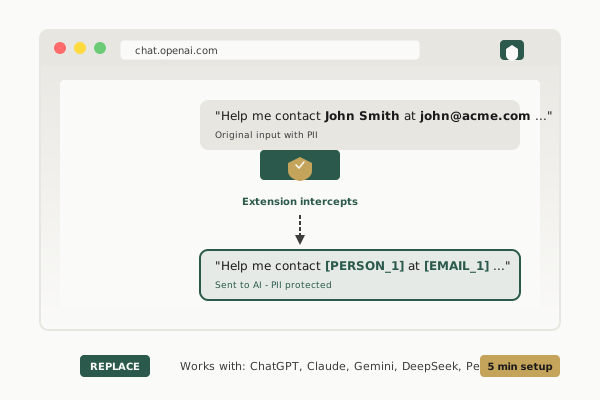
Solution: Deploy the Chrome Extension via enterprise MDM with custom configuration. Real-time PII interception before prompts reach AI services, with automatic response de-anonymization. Extend to custom AI platforms via site injection rules.
1Consulting Firm: Multi-Platform AI Usage
Context
A management consulting firm uses various AI tools for research and document drafting. Consultants work on Mac, Windows, and Linux workstations. Client names and project details must never reach external AI providers.
Implementation
- Deploy Chrome Extension via Google Workspace Admin with force-install policy
- Configure custom site list: chat.openai.com, claude.ai, gemini.google.com, perplexity.ai, chat.deepseek.com
- Create consulting preset: client names, project codes, competitor names, financial figures
- Enable auto-anonymize on paste for all text inputs on listed sites
- Store personal encryption keys in Chrome sync for seamless cross-device experience
- Responses automatically de-anonymized; consultant sees original context
Use Cases
- Consultant asks ChatGPT to summarize client meeting notes; client name encrypted before sending
- Analyst uses Perplexity for market research; competitor names protected
- Manager drafts proposal in Claude; all PII replaced with tokens
Try AI Protection Live
Protect PII before it reaches ChatGPT, Claude, or Gemini:
2Software Company: DeepSeek Code Assistant
Context
A software development company wants to use DeepSeek for code assistance but must protect API keys, database credentials, and internal hostnames that appear in code snippets.
Implementation
- Deploy Chrome Extension with developer-focused custom entities
- Configure entities: API keys (regex patterns), JWT tokens, connection strings, internal domains
- Add custom site injection for DeepSeek: chat.deepseek.com, api.deepseek.com
- Enable code block detection: scan <pre> and <code> elements before submission
- Use Replace method for credentials (synthetic values); Mask for hostnames
- Team lead reviews anonymization logs weekly for policy tuning
Use Cases
- Developer pastes database connection string; password replaced with [DB_PASSWORD_1]
- Code review snippet sent to DeepSeek; internal API endpoints masked
- Error logs analyzed by AI without exposing production server names
3Financial Services: Perplexity Research
Context
An investment firm uses Perplexity AI for market research and due diligence. Analysts handle sensitive deal information, portfolio company names, and investment amounts that must remain confidential.
Implementation
- Deploy via Microsoft Intune for Windows/Mac; Jamf for additional Mac coverage
- Create financial services preset: company valuations, deal sizes, investor names, fund details
- Configure PCI-DSS entities for credit card and account numbers
- Add Perplexity to custom sites with strict mode: anonymize all form inputs
- Enable clipboard monitoring: warn before pasting sensitive content
- Linux workstations covered via Chrome policy JSON in /etc/opt/chrome/policies/
Use Cases
- Analyst researches acquisition target; company name encrypted in all queries
- Portfolio manager asks about market trends with deal values anonymized
- Compliance officer audits AI usage; sees only encrypted tokens in logs
MCP Server for Developer Environments
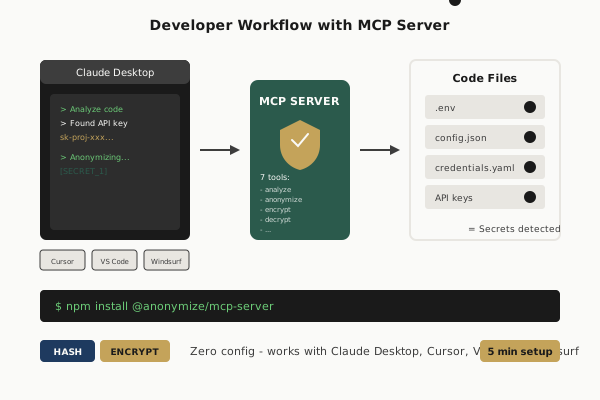
Solution: Deploy the MCP Server as a privacy shield between AI tools and sensitive data. Seven specialized tools automatically detect and anonymize secrets before they reach AI providers, with optional decryption for authorized workflows.
1DevOps Team: Infrastructure as Code
Context
A DevOps team manages Terraform and Ansible configurations containing AWS access keys, SSH private keys, and database passwords. They want to use Claude Desktop for infrastructure troubleshooting.
Implementation
- Install MCP Server via npm; configure in Claude Desktop's claude_desktop_config.json
- Create DevOps entity group: AWS_ACCESS_KEY, AWS_SECRET_KEY, SSH_PRIVATE_KEY, DB_PASSWORD
- Configure regex patterns for Terraform variables:
variable ".*_key",secret = ".*" - Enable analyze_text and anonymize_text tools for Claude Desktop
- Use Hash method (SHA-256) for consistent secret pseudonymization across sessions
- Store entity mappings locally for debugging; never synced to cloud
Use Cases
- Engineer asks Claude to debug Terraform state; AWS keys automatically hashed
- Ansible playbook reviewed by AI; all vault passwords replaced with tokens
- CI/CD pipeline YAML analyzed; GitHub tokens never exposed to AI
Try MCP Integration Live
Claude Desktop + MCP Server for development workflows:
2Backend Team: API Development in Cursor
Context
Backend developers use Cursor IDE with AI assistance for Node.js and Python development. Code frequently contains JWT secrets, OAuth client IDs, and third-party API keys.
Implementation
- Configure MCP Server HTTP endpoint for Cursor IDE integration
- Define API secret patterns: Bearer tokens, OAuth2 credentials, Stripe/Twilio/SendGrid keys
- Enable environment file detection: .env, .env.local, config.yaml
- Apply Encrypt method for reversible protection; team shares decryption key
- Cursor sends code through MCP Server before reaching AI backend
- Decrypted responses allow developers to copy-paste working code
Use Cases
- Developer asks Cursor to refactor authentication module; JWT secret encrypted
- Code completion in .env file; all values anonymized before AI suggestion
- Error stack trace sent to AI; database connection strings protected
3Security Team: Penetration Testing Reports
Context
Security researchers want to use AI for analyzing penetration test findings and generating remediation reports. Findings contain internal IP addresses, discovered credentials, and vulnerability details.
Implementation
- Deploy MCP Server with security-focused preset
- Configure entities: internal IPs (RFC 1918), discovered passwords, hostnames, CVE references
- Enable document analysis for PDF pentest reports via analyze_document tool
- Use Redact method for maximum security; no reversibility needed
- Process findings through MCP before asking Claude for remediation advice
- Generate client-safe reports with all sensitive details removed
Use Cases
- Researcher asks AI to prioritize vulnerabilities; all target IPs redacted
- Report template generated by Claude; discovered credentials never exposed
- Remediation steps drafted for client; internal infrastructure details protected
Building AI-Powered Applications
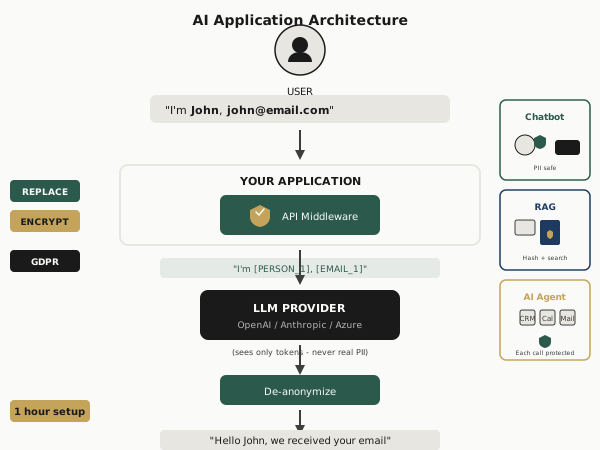
Solution: Integrate anonymize.solutions API or MCP Server into your AI pipeline. Anonymize user input before LLM processing, then de-anonymize responses. Your AI application works normally while PII never leaves your infrastructure.
1AI Customer Support Chatbot
Context
A SaaS company builds a customer support chatbot using OpenAI's GPT-4 API. Customers ask questions containing their names, email addresses, account IDs, and billing information. GDPR requires this data stays within EU infrastructure.
Implementation
- Add anonymize.solutions API as middleware before OpenAI calls
- Configure GDPR preset: names, emails, phone numbers, addresses, account IDs
- Customer message: "Hi, I'm John Smith, john@email.com, order #12345 is late"
- Anonymized to AI: "Hi, I'm [PERSON_1], [EMAIL_1], order [ORDER_1] is late"
- GPT responds with tokens; de-anonymize before showing to customer
- Store encryption key per session; original PII never sent to OpenAI
Use Cases
- Customer asks about their account; AI sees only anonymized tokens
- Billing questions processed without exposing credit card details
- Chat transcripts stored with PII encrypted; GDPR-compliant audit trail
Try AI App Integration Live
API for RAG pipelines and LLM pre-processing:
2RAG Pipeline with Vector Database
Context
An enterprise builds a RAG (Retrieval-Augmented Generation) system to query internal documents. Documents contain employee names, salaries, performance reviews, and confidential project details. Vector embeddings must not contain searchable PII.
Implementation
- Process documents through API batch endpoint before vectorization
- Use Hash method (SHA-256) for consistent tokens across document corpus
- Same person name always becomes same hash; semantic relationships preserved
- Index anonymized documents in Pinecone/Weaviate/Chroma
- User queries anonymized; retrieve relevant chunks; de-anonymize response
- Store hash-to-PII mapping in secure key vault for authorized decryption
Use Cases
- HR asks "What's the average salary in Engineering?" — names never in vector DB
- Legal searches contracts; client names consistently hashed for accurate retrieval
- Executive dashboard queries anonymized data; decrypts only for authorized viewers
3AI Agent with MCP Integration
Context
A company deploys an AI agent using Claude's computer use or Anthropic's tool use capabilities. The agent accesses CRM, email, and calendar — all containing customer and employee PII. Agent actions must be logged for compliance.
Implementation
- Deploy MCP Server as the privacy layer for all agent tool calls
- Agent reads customer record from CRM; MCP anonymizes before Claude sees it
- Configure tool-specific rules: CRM = GDPR preset, Calendar = names only, Email = full anonymization
- Use Encrypt method (AES-256-GCM) for reversible protection
- Agent writes response; MCP de-anonymizes before sending to destination
- All interactions logged with encrypted tokens; compliance audit shows no PII exposure
Use Cases
- Agent schedules meeting; attendee names encrypted in Claude's context
- Agent drafts email reply; customer details anonymized during composition
- Agent updates CRM; original PII restored only when writing to authorized system
API Integration for IT Support
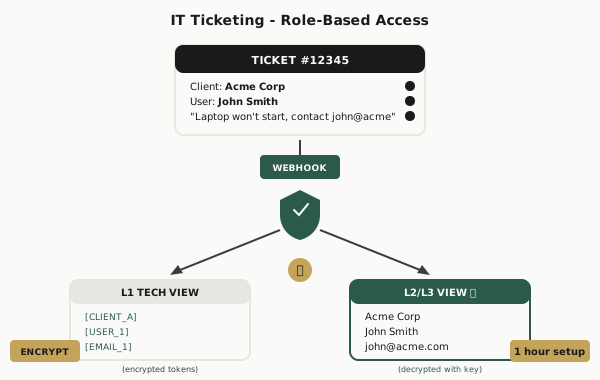
Solution: Integrate the anonymize.solutions REST API into ticket workflows. Anonymize client details on ticket creation, with role-based decryption for authorized support staff. External vendors see only encrypted identifiers.
1MSP: HelloPSA Ticket Anonymization
Context
A Managed Service Provider uses HelloPSA for ticketing. L1 technicians should see anonymized client data, while L2/L3 engineers access full details. External vendors receive tickets with all PII encrypted.
Implementation
- Create HelloPSA webhook triggering on ticket creation/update
- Call anonymize.solutions API with ticket description and custom fields
- Configure MSP preset: client company names, contact names, IP addresses, license keys
- Store encrypted version in "External Notes" field; original in "Internal Notes"
- L1 technicians access external view by default; L2+ unlock internal view with team key
- Vendor escalations automatically use encrypted external notes
Use Cases
- L1 tech troubleshoots printer issue; sees "[CLIENT_A] reports printing problems"
- L2 engineer escalates to vendor; vendor receives fully anonymized ticket
- Account manager reviews ticket history; decrypts for client reporting
Try API Integration Live
Ticketing and support system integration:
2IT Department: ConnectWise Manage
Context
An enterprise IT department uses ConnectWise Manage. HR tickets contain sensitive employee information that only HR IT liaisons should access. General technicians need to work tickets without PII exposure.
Implementation
- Build ConnectWise integration via REST API and custom workflow rules
- Create HR-specific entities: employee IDs, SSNs, salary info, performance ratings
- Automatically anonymize HR board tickets; encrypt with HR-only key
- General IT sees: "User [EMP_4721] cannot access [SYSTEM_A]"
- HR IT liaison decrypts via ConnectWise plugin with personal key
- Audit trail logs all decryption events for compliance
Use Cases
- IT tech resets password for [EMP_4721] without knowing actual employee
- HR liaison investigates access issue; decrypts to see full employee details
- Compliance audit reviews who accessed sensitive tickets
3Customer Support: Freshdesk Integration
Context
A SaaS company uses Freshdesk for customer support. Tickets contain customer account details, payment information, and usage data. Offshore support teams should have limited PII access.
Implementation
- Integrate via Freshdesk Apps Framework calling anonymize.solutions API
- Configure SaaS support preset: customer emails, account IDs, subscription tiers, payment methods
- Apply Mask method for emails (j***@***.com) visible to offshore team
- Apply Encrypt method for payment details; only billing team decrypts
- Onshore senior agents access full customer view with regional key
- CSAT surveys sent with anonymized ticket references
Use Cases
- Offshore agent handles feature question; sees masked email and account ID
- Billing team processes refund request; decrypts payment details
- Quality team reviews tickets for training; all PII appropriately protected
Event Software Anonymization
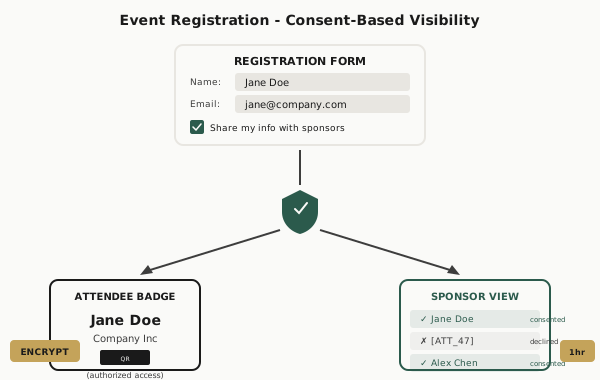
Solution: Inject encrypted anonymization into event platforms via API integration. Attendee data encrypted with event-specific keys. Authorized staff (registration, VIP handlers) decrypt with their role-based keys.
1Conference Organizer: Eventbrite
Context
A technology conference uses Eventbrite for registration. Sponsor exhibitors want attendee lists for lead scanning, but GDPR requires consent-based sharing. Only attendees who opt-in should be identifiable.
Implementation
- Build Eventbrite webhook handler processing registration events
- Create attendee preset: full names, email addresses, company names, job titles
- Encrypt non-consenting attendees with organizer master key
- Consenting attendees encrypted with sponsor-shareable key
- Sponsor receives list: consenting names visible, others as [ATTENDEE_XXX]
- Badge printing uses decryption API; registration desk has full access
Use Cases
- Sponsor scans badge; sees real name only if attendee consented to sharing
- Registration desk checks in attendee; decrypts full details for verification
- Post-event analytics processed with anonymized non-consenting attendees
Try Event Processing Live
Real-time event stream anonymization:
2Corporate Events: Cvent
Context
A pharmaceutical company uses Cvent for global sales meetings and medical conferences. HCP (Healthcare Professional) attendee data has strict regulatory requirements. Different regions have different access levels.
Implementation
- Integrate via Cvent API with middleware anonymization layer
- Configure HCP-specific entities: physician names, NPI numbers, DEA numbers, affiliations
- Create regional keys: EU key (GDPR), US key (Sunshine Act), APAC key (local regulations)
- Event staff in each region decrypt only their attendees
- Global reports use aggregated anonymized data; no individual HCP identification
- Compliance team audits all decryption events by region
Use Cases
- EU event coordinator sees real names for EU HCPs only
- Global marketing analyzes attendance trends with anonymized data
- Compliance generates Sunshine Act reports with appropriate disclosures
3Virtual Events: Hopin
Context
A professional association runs virtual networking events on Hopin. Attendees want to connect with each other, but the platform shares data with third-party analytics. Member privacy is paramount.
Implementation
- Build Hopin integration via API; process attendee data on registration
- Encrypt attendee profiles with association master key
- Create networking tokens: attendees see each other's encrypted IDs
- Connection requests trigger mutual decryption: both parties reveal identity
- Analytics platform receives only encrypted attendance data
- Member directory uses opt-in decryption: members choose visibility
Use Cases
- Attendee browses networking area; sees [MEMBER_A], [MEMBER_B] until connection accepted
- Both parties accept connection; real names and emails revealed to each other
- Event analytics shows "500 connections made" without identifying individuals
- Member opts into directory; profile decrypted for all members
White-Label for Service Providers
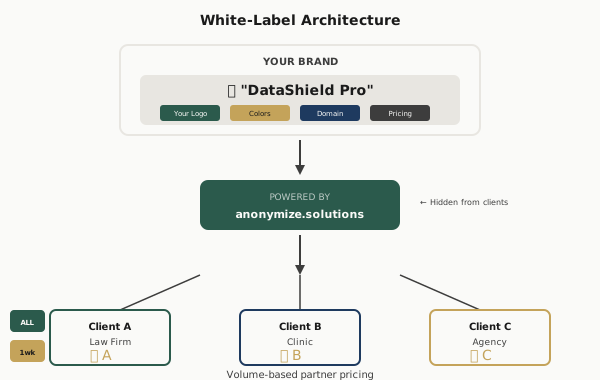
Solution: Deploy Managed Private with White-Label option. Rebrand the platform with your logo, colors, and domain. Manage multiple client environments from a single dashboard. Offer anonymization as part of your service portfolio with volume-based partner pricing.
1MSP: Data Protection as a Service
Context
A Managed Service Provider serves 260+ SMB clients across healthcare, legal, and financial sectors. Each client needs GDPR-compliant data handling when using AI tools, but lacks the expertise to implement anonymization themselves.
Implementation
- Deploy white-labeled Managed Private instance with MSP branding
- Configure multi-tenant dashboard for per-client environment management
- Create industry-specific presets: Healthcare (HIPAA), Legal (client privilege), Financial (PCI-DSS)
- Deploy Chrome Extension via client MDM with MSP branding
- Integrate usage reporting with PSA billing (ConnectWise, Autotask, HelloPSA)
- Offer tiered plans: Basic (50 users), Professional (200 users), Enterprise (unlimited)
Use Cases
- Law firm client uses "MSP DataShield" (branded anonymize.solutions) for AI chat protection
- Healthcare client processes patient documents with HIPAA-compliant anonymization
- MSP bills anonymization usage alongside other managed services
Try White-Label Integration
Embed anonymization into your platform:
2Legal Tech Vendor: Embedded Anonymization
Context
A legal technology company offers case management and document automation software. Their clients (law firms) increasingly use AI for document drafting, but worry about confidentiality. The vendor wants to add anonymization as a native feature.
Implementation
- Integrate anonymize.solutions API into existing legal tech platform
- White-label API endpoints with vendor's domain (api.legaltech-vendor.com/anonymize)
- Add "AI Privacy Mode" toggle in document editor UI
- Create legal-specific entities: case numbers, opposing counsel, judge names, court references
- Implement per-matter encryption keys: each case file has isolated decryption
- Include anonymization in existing SaaS subscription; no separate billing
Use Cases
- Attorney enables "AI Privacy Mode" before sending contract to ChatGPT for review
- Client names automatically encrypted; AI sees [CLIENT_A], attorney sees real name
- Vendor differentiates from competitors with built-in privacy protection
3IT Consultancy: Project-Based Deployments
Context
An IT consultancy specializes in data governance and compliance projects. They frequently recommend anonymization solutions to clients but want to offer their own branded product instead of referring to third parties.
Implementation
- Establish reseller partnership with volume-based pricing
- White-label platform as "ConsultCo DataPrivacy Suite"
- Offer three deployment models to clients: Hosted (SaaS), Managed Private, Self-Managed
- Include implementation services: policy design, custom entity creation, integration
- Provide ongoing support as managed service with margin on license
- Use partner dashboard to track client deployments and renewals
Use Cases
- Consultancy wins GDPR compliance project; includes anonymization as deliverable
- Client sees "ConsultCo DataPrivacy Suite" throughout engagement
- Consultancy earns margin on license and billable implementation services
- Long-term support contract creates recurring revenue stream
Workflow Automation with Local AI
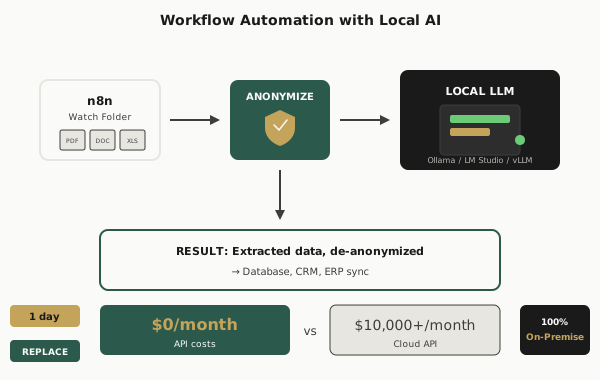
Solution: Combine n8n workflow automation with local LLMs (Ollama, LM Studio, vLLM) and anonymize.solutions's PII protection. Process documents entirely on-premise: extract text, anonymize PII, send to local AI, receive results — all without data ever leaving your infrastructure. Zero API costs, full compliance.
1Document Processing Pipeline with Ollama
Context
A legal services company processes thousands of contracts monthly. They need to extract key terms, dates, and parties from PDFs — but GPT-4 API costs are prohibitive ($0.03/1K tokens × millions of tokens = €10,000+/month), and contract data cannot leave their network.
Implementation
- Deploy n8n on-premise with document processing workflows
- Configure Ollama with Llama 3.1 70B or Mixtral for document analysis
- n8n workflow: Watch folder → Extract PDF text → Call anonymize.solutions API → Send to Ollama → Parse results → Store in database
- Apply GDPR preset to anonymize party names, addresses, signatures before AI processing
- Ollama runs on local GPU server (RTX 4090 or A100); no external API calls
- Results de-anonymized for final contract database with full PII intact
Use Cases
- Contract received via email; automatically processed and summarized overnight
- Key dates, obligations, and termination clauses extracted without human review
- Compliance team audits AI processing; all data remained on-premise
Try Workflow Automation Live
n8n, Make, Zapier integration examples:
2Customer Feedback Analysis with LM Studio
Context
A SaaS company collects customer feedback via support tickets, surveys, and app reviews. They want AI-powered sentiment analysis and feature request extraction — but customer emails contain PII that shouldn't reach OpenAI or Anthropic.
Implementation
- Deploy LM Studio on Mac Studio with Apple Silicon optimization
- Configure n8n workflow: Freshdesk webhook → anonymize.solutions API → LM Studio → Notion database
- Create customer feedback preset: email addresses, account IDs, company names, phone numbers
- LM Studio runs Mistral 7B locally; responses in <2 seconds per ticket
- Classify feedback: Bug Report, Feature Request, Praise, Complaint with confidence score
- Weekly summary generated by same LLM; shared with product team
Use Cases
- Support ticket arrives; sentiment and category assigned automatically
- Product manager queries "Show all Feature Requests mentioning 'dark mode'"
- No per-token API costs; unlimited processing for fixed hardware cost
3Invoice Data Extraction with vLLM
Context
An accounting firm processes invoices for multiple clients. Each invoice contains vendor names, tax IDs, bank details, and amounts. Commercial OCR/AI solutions are expensive and require data upload to cloud services.
Implementation
- Deploy vLLM on Linux server with OpenAI-compatible API endpoint
- n8n workflow: Email attachment → PDF to image → Tesseract OCR → anonymize.solutions → vLLM → ERP sync
- Configure financial entities: IBAN, BIC, VAT IDs, tax numbers, bank account numbers
- vLLM runs Qwen 2.5 72B with structured output for consistent JSON
- Extracted data: vendor name, invoice number, date, line items, totals, tax breakdown
- Sync to Business Central or DATEV with original PII restored
Use Cases
- Invoice received; automatically parsed and prepared for booking
- Accountant reviews extracted data; corrects only edge cases
- Year-end: processed 50,000 invoices with €0 API costs
Investigative Journalism
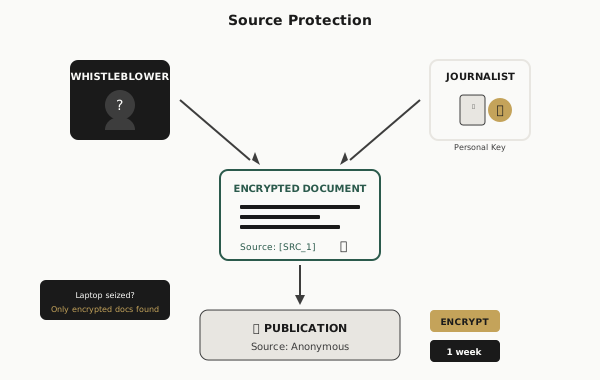
Solution: Use anonymize.solutions encryption with personal keys to protect source identities at rest and in transit. Share encrypted documents with editors who hold decryption keys. Collaborate on anonymized versions, then decrypt only for final verification. Source protection by design.
1Whistleblower Document Protection
Context
An investigative reporter receives leaked documents from a corporate whistleblower. The documents contain the source's name in metadata and references, internal employee IDs, and identifiable writing patterns. The story will take months; materials must be protected throughout.
Implementation
- Use Desktop App to process all received documents immediately upon receipt
- Create source protection preset: names, employee IDs, email addresses, department references
- Apply Encrypt method with personal encryption key stored in password manager
- Strip document metadata (author, creation date, revision history) before encryption
- Store only encrypted versions in cloud storage (Dropbox, Google Drive)
- Decrypt locally only when actively working on story; re-encrypt immediately after
Use Cases
- Reporter's laptop seized; only encrypted documents found, source identity protected
- Cloud storage subpoenaed; provider can only hand over encrypted files
- Story published; original documents with source identity safely archived offline
2Cross-Border Investigation Team
Context
A consortium of journalists across three countries investigates financial crimes. They need to share research, interview transcripts, and document analyses — but different sources are known to different team members, and not all should have access to all identities.
Implementation
- Create team encryption hierarchy: consortium key (all members), country keys, individual journalist keys
- Process documents with anonymize.solutions API integrated into secure collaboration platform
- Source identities encrypted with individual journalist's key; only they can decrypt
- Shared research encrypted with consortium key; all team members can access
- Country-specific sources encrypted with country key; limited to national team
- Final story review: each journalist decrypts their sources for legal verification
Use Cases
- German journalist's sources invisible to French colleagues (different keys)
- All team members analyze financial documents with company names anonymized
- Editor reviews story; asks German journalist to verify specific claim from their source
- Publication: consortium decides together which encrypted names to reveal
3AI-Assisted Research with Source Safety
Context
A data journalist wants to use AI tools to analyze leaked datasets and identify patterns — but the data contains identifiable information that could expose sources if sent to commercial AI providers like ChatGPT or Claude.
Implementation
- Deploy Chrome Extension with strict anonymization for all AI platforms
- Configure investigation preset: source names, code names, locations, dates, phone numbers
- Enable clipboard monitoring: warn before pasting any text to AI tools
- Use AI to find patterns in anonymized data: "[COMPANY_A] transferred [AMOUNT_1] to [COMPANY_B]"
- AI identifies suspicious patterns; journalist decrypts relevant entities locally
- Alternatively: use local LLM with n8n for fully offline analysis
Use Cases
- Journalist asks ChatGPT to summarize 1000 anonymized transaction records
- AI identifies "3 companies received 80% of funds" — without knowing which companies
- Journalist decrypts locally: "[COMPANY_A] = Offshore Holdings Ltd"
- Follow-up research on identified companies; source data never exposed to AI
Healthcare Data Protection
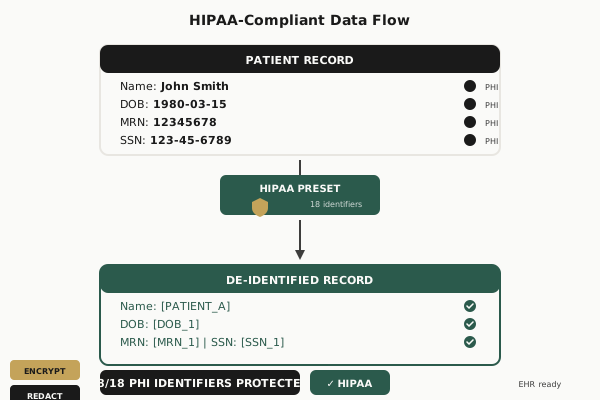
Solution: Deploy anonymize.solutions with HIPAA preset covering 18 PHI identifiers. Use role-based encryption keys to control access by department. Integrate with EHR systems, clinical research platforms, and administrative tools while maintaining compliance audit trails.
1Hospital Network: EHR Data Sharing
Context
A regional hospital network shares patient records between facilities via a Health Information Exchange (HIE). Referring physicians need access to relevant clinical data, but full patient charts should remain protected. External specialists receive only de-identified summaries.
Implementation
- Integrate anonymize.solutions API with Epic/Cerner middleware for real-time anonymization
- Configure HIPAA preset with 18 PHI identifiers: MRN, SSN, DOB, addresses, phone numbers
- Create clinical custom entities: attending physician names, room numbers, insurance policy IDs
- Apply Encrypt method for internal transfers; decrypt with facility-specific keys
- Apply Redact method for external specialist consultations; no reversibility
- Audit all data access with patient ID, accessing provider, and purpose of use
Use Cases
- Patient transfers between facilities; receiving hospital decrypts with network key
- External cardiologist reviews case; sees "[PATIENT_A], 67M, presenting with chest pain"
- Quality assurance team analyzes outcomes with fully anonymized data
Try HIPAA Compliance Live
All 18 PHI identifiers with reversible encryption:
2Clinical Research: Trial Data De-identification
Context
A pharmaceutical company runs multi-site clinical trials across 12 countries. Trial data must be aggregated for analysis, but local privacy regulations (GDPR in EU, HIPAA in US, PIPL in China) require de-identification before cross-border transfer. Researchers need consistent subject identifiers for longitudinal tracking.
Implementation
- Deploy Desktop App at each trial site for local data processing
- Configure region-specific presets: EU (GDPR), US (HIPAA), APAC (local regulations)
- Use Hash method (SHA-256) for subject IDs; consistent pseudonymization across sites
- Apply Replace method for investigator names; synthetic names maintain readability
- Batch process trial data exports before transfer to central biostatistics team
- Principal investigators retain local decryption keys for adverse event follow-up
Use Cases
- Site coordinator exports weekly data; all subject names hashed to consistent IDs
- Central team analyzes efficacy across sites; no access to individual identities
- Serious adverse event reported; PI decrypts locally for regulatory reporting
3Telemedicine: AI-Assisted Documentation
Context
A telemedicine platform wants to use AI for clinical note summarization and coding suggestions. Physicians paste consultation notes into AI tools for assistance, but patient data must never reach external AI providers like ChatGPT or Claude.
Implementation
- Deploy Chrome Extension across all physician workstations via MDM
- Configure clinical preset: patient names, DOB, MRN, medications, diagnosis codes
- Add custom entities: referring physician names, facility codes, insurance details
- Enable auto-anonymize for all AI platforms: ChatGPT, Claude, Gemini
- AI receives: "[PATIENT_A], 45F, presents with [SYMPTOM_1], history of [CONDITION_1]"
- Response de-anonymized; physician sees original patient context restored
Use Cases
- Physician asks AI to draft referral letter; patient name encrypted before sending
- AI suggests ICD-10 codes based on anonymized symptoms; physician verifies
- Compliance audit shows no PHI ever reached external AI services
Academic Data Protection
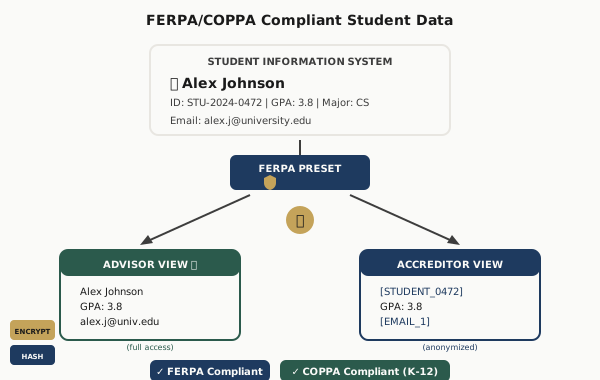
Solution: Deploy anonymize.solutions across academic workflows with custom presets for student records, research data, and administrative functions. Enable researchers to analyze data without individual identification while maintaining audit trails for IRB compliance.
1University: Student Record Protection
Context
A large university shares student performance data with academic advisors, department chairs, and external accreditation bodies. FERPA requires that student identities be protected when data is shared for institutional research or with third parties.
Implementation
- Integrate anonymize.solutions API with Student Information System (Banner, PeopleSoft)
- Create FERPA preset: student names, IDs, SSN, addresses, email, enrollment status
- Configure role-based access: advisors see real names, accreditors see anonymized data
- Apply Hash method for longitudinal studies; consistent student IDs across semesters
- External reports use Redact method; no reversibility for third parties
- Registrar retains master key for FERPA-compliant disclosure requests
Use Cases
- Academic advisor views full student record with decryption access
- Institutional research analyzes graduation rates with hashed student IDs
- Accreditation report contains "[STUDENT_XXX]" placeholders throughout
Try FERPA Compliance Live
Student data protection and research anonymization:
2Research Institution: IRB-Compliant Data Sharing
Context
A social science research center conducts surveys and interviews containing sensitive personal information. IRB protocols require de-identification before data sharing with collaborators. Some studies span multiple institutions with different ethics approvals.
Implementation
- Deploy Desktop App for researchers handling interview transcripts
- Create research preset: participant names, locations, employers, family members
- Configure custom entities: study-specific identifiers, code names, interviewer references
- Apply Encrypt method for internal team; researchers share decryption key
- External collaborators receive Replace method output; synthetic names maintain narrative
- Principal investigator maintains mapping file in encrypted local vault
Use Cases
- Graduate student transcribes interviews; names auto-anonymized during processing
- External collaborator receives dataset with "Maria" replaced by "Participant_7"
- IRB audit verifies de-identification process; approves data sharing agreement
3K-12 School District: AI Learning Tools
Context
A school district wants teachers to use AI tools for lesson planning and student feedback generation. Teachers often reference specific students when asking AI for differentiation strategies, but COPPA and FERPA prohibit sharing minor student data with commercial AI providers.
Implementation
- Deploy Chrome Extension district-wide via Google Admin Console
- Create K-12 preset: student names, parent names, addresses, grade levels, IEP status
- Add custom entities: school names, teacher names, classroom numbers
- Configure for ChatGPT, Claude, Gemini, and educational AI platforms (Khanmigo, etc.)
- Enable strict mode: anonymize all form inputs on listed AI sites
- IT administrator reviews anonymization logs weekly; no student PII ever sent externally
Use Cases
- Teacher asks AI for differentiation strategies for "[STUDENT_A] who struggles with fractions"
- Special education teacher requests IEP goal suggestions; student details protected
- Principal uses AI to draft parent communication; names encrypted before AI processing
Public Sector Data Protection
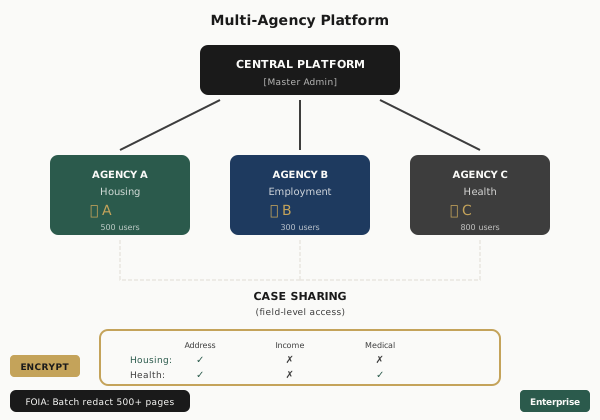
Solution: Deploy anonymize.solutions with government presets for citizen data, case files, and administrative records. Automate FOIA/GDPR redaction workflows. Enable secure inter-agency data sharing with role-based decryption. Maintain complete audit trails for oversight.
1Municipal Government: FOIA Request Processing
Context
A city government receives hundreds of Freedom of Information Act (FOIA) requests annually. Responsive documents contain employee names, citizen PII, and internal deliberations that require redaction. Manual review is time-consuming and error-prone.
Implementation
- Deploy Desktop App for FOIA officers processing document requests
- Create FOIA preset: citizen names, addresses, SSN, license numbers, case numbers
- Configure employee entities: staff names below director level, internal phone extensions
- Apply Redact method for all FOIA responses; permanent removal, no reversibility
- Batch process document collections (100+ pages) with consistent redaction rules
- Generate redaction log documenting each entity removed for legal compliance
Use Cases
- Journalist requests building permits; citizen applicant names redacted automatically
- FOIA officer processes 500-page document set in 2 hours vs. 2 days manually
- Appeal filed; redaction log proves consistent application of exemption rules
Try Public Sector Compliance
GDPR compliance for government workflows:
2Social Services: Inter-Agency Case Sharing
Context
A state social services department shares case information with housing authorities, employment services, and healthcare providers. Each agency has different access authorizations. Case workers need to coordinate services without over-sharing sensitive client details.
Implementation
- Integrate anonymize.solutions API with case management system middleware
- Create social services preset: client names, SSN, benefit amounts, case notes
- Configure agency-specific encryption keys: Housing sees addresses, Employment sees work history
- Apply Encrypt method with field-level key assignment
- Each agency decrypts only fields authorized in data sharing agreement
- Central coordinator holds master key for comprehensive case review
Use Cases
- Housing authority receives case referral; decrypts address but not income details
- Employment services sees work history; client's medical conditions remain encrypted
- Case audit reveals who accessed what data and when across all agencies
3Public Health: Epidemic Surveillance Data
Context
A national public health agency collects disease surveillance data from hospitals and laboratories. Researchers need access to analyze outbreak patterns, but individual patient identification could stigmatize communities. International health organizations require aggregated, de-identified data.
Implementation
- Deploy API integration at data ingestion from reporting facilities
- Configure public health preset: patient names, addresses, facility names, physician identifiers
- Apply Hash method for patient IDs; enables longitudinal tracking without identification
- Use Mask method for geographic data; preserve region but obscure exact location
- International exports use Redact method; no reversibility for external parties
- Epidemiologists access research database; field investigators decrypt for contact tracing
Use Cases
- Researcher analyzes disease clusters; sees "Region_Northeast" not specific addresses
- Contact tracer decrypts specific case for outbreak investigation with authorization
- WHO receives aggregated data; no individual patient identification possible
Legal Industry Data Protection
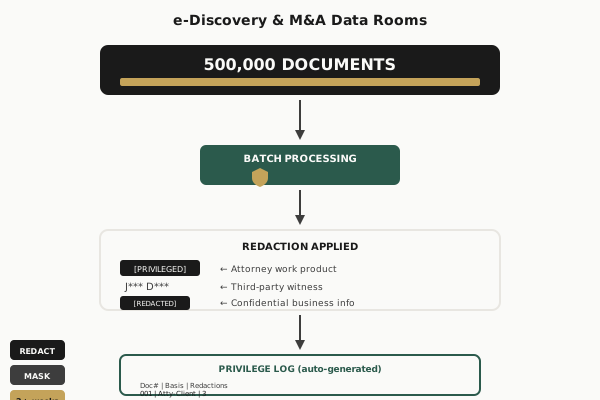
Solution: Deploy anonymize.solutions with legal-specific presets covering client names, case numbers, opposing counsel, and privileged content markers. Use encryption for internal collaboration and redaction for document production. Enable per-matter key isolation for conflict protection.
1Litigation Firm: e-Discovery Document Production
Context
A litigation firm processes 500,000 documents for discovery production. Documents contain privileged attorney notes, third-party PII, and confidential business information. Producing party must redact privileged content while maintaining document integrity for opposing counsel review.
Implementation
- Deploy Desktop App with batch processing for document collections (100 files per batch)
- Create e-discovery preset: attorney names, privilege markers, client communications, work product
- Configure third-party PII entities: witness names, expert identities, non-party addresses
- Apply Redact method for privileged content; permanent removal for production
- Apply Mask method for third-party PII; partial visibility for context
- Generate privilege log with redaction metadata for court submission
Use Cases
- Paralegal processes document batch; attorney notes auto-redacted with "[PRIVILEGED]"
- Third-party witness names masked to "J*** D***" preserving readability
- Privilege log auto-generated; lists each redaction with basis and document reference
Try Legal Workflows Live
Client confidentiality and reversible encryption:
2Corporate Law: M&A Due Diligence Data Room
Context
A corporate law firm manages virtual data rooms for M&A transactions. Target company documents contain employee PII, customer lists, and supplier contracts. Different bidders receive different access levels based on deal stage. Failed bidders must not retain identifiable information.
Implementation
- Integrate anonymize.solutions API with data room platform (Intralinks, Datasite, Firmex)
- Create M&A preset: employee names, salaries, customer names, supplier identities, contract values
- Configure bidder-tier keys: Stage 1 (fully anonymized), Stage 2 (partial), Final (encrypted with escrow)
- Apply Replace method for early-stage bidders; synthetic data maintains utility
- Apply Encrypt method for final bidders; decryption key released at signing
- Automatic key revocation for failed bidders; data becomes permanently anonymized
Use Cases
- Stage 1 bidder reviews financials; sees "Employee_001 earns [SALARY_1]" not real names
- Final bidder signs NDA; receives decryption key for full employee roster
- Failed bidder's downloaded documents become permanently anonymized; no competitive harm
3International Firm: Cross-Border Client Communication
Context
A global law firm with offices in 15 countries communicates with clients via email and document portals. GDPR, attorney-client privilege, and local bar rules require protection of client identity across jurisdictions. Associates in one office shouldn't see client details from other offices unless authorized.
Implementation
- Deploy Office Add-in for Outlook and Word across all offices
- Create multi-jurisdictional preset: client names in 12 languages, local ID formats, address patterns
- Configure office-specific keys: London, New York, Frankfurt, Singapore, Sydney
- Apply Encrypt method for all client communications by default
- Attorneys decrypt client details with their office key; cross-office requires dual authorization
- Enable Chrome Extension for attorneys using AI tools (ChatGPT, Claude) for legal research
Use Cases
- London attorney drafts memo; Frankfurt colleague sees "[CLIENT_A]" until authorization granted
- Partner uses Claude for contract analysis; client names encrypted before AI processing
- Compliance audit shows client data segmentation by office; no unauthorized cross-access
Financial Services Data Protection
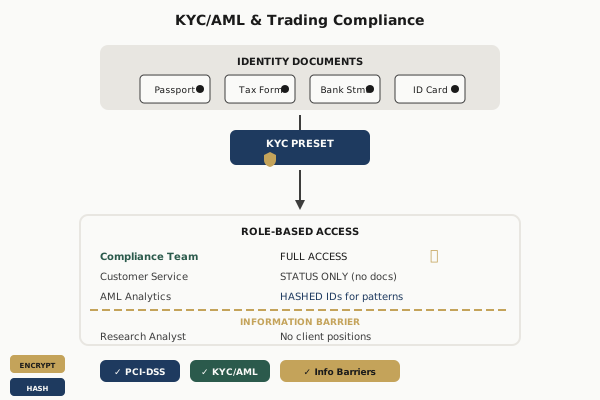
Solution: Deploy anonymize.solutions with PCI-DSS and financial presets covering account numbers, transaction data, and customer identities. Use role-based encryption for internal teams and redaction for regulatory reporting. Enable consistent pseudonymization for fraud detection analytics.
1Retail Bank: KYC/AML Document Processing
Context
A retail bank processes customer identity documents (passports, utility bills, tax returns) for KYC verification. Compliance teams need to verify identities, but customer service and operations should not have access to full identity documents. AML investigators need transaction patterns without individual identification.
Implementation
- Integrate anonymize.solutions API with document management system (OpenText, M-Files)
- Configure KYC preset: passport numbers, national IDs, tax IDs, utility account numbers
- Apply Encrypt method for compliance team; full document access with department key
- Apply Redact method for customer service; see verification status, not source documents
- Use Hash method for AML analytics; consistent customer pseudonyms for pattern detection
- Image anonymization with OCR + Redact for scanned ID documents
Use Cases
- Compliance officer verifies identity; decrypts passport scan with compliance key
- Customer service agent sees "KYC Status: Verified" without accessing source documents
- AML analyst identifies suspicious pattern across "Customer_A7F3" transactions
Try Financial Compliance Live
PCI-DSS and payment card protection:
2Mortgage Lender: Loan Application Processing
Context
A mortgage lender processes loan applications containing income statements, employment history, property details, and credit reports. Underwriters need full details, but loan processors and third-party appraisers should have limited access. AI tools assist with document analysis but must not receive customer PII.
Implementation
- Deploy Desktop App for loan processors handling application packages
- Create mortgage preset: SSN, income figures, employer names, property addresses, credit scores
- Configure role-based encryption: Underwriter (full), Processor (partial), Appraiser (property only)
- Enable Chrome Extension for staff using AI to analyze income documents
- Apply Mask method for income figures shown to processors: "$***,***"
- Third-party appraiser receives property address but no borrower identity
Use Cases
- Underwriter reviews complete application; decrypts all fields with underwriting key
- Processor tracks application status; sees masked income and encrypted SSN
- Staff uses Claude to summarize tax returns; all PII encrypted before AI processing
3Investment Firm: Research & Trading Compliance
Context
An investment management firm conducts research on companies and manages client portfolios. Research analysts must not know which clients hold positions in companies they cover (information barrier). Trading desks need execution details but not client identities. Compliance needs full visibility for market abuse monitoring.
Implementation
- Integrate anonymize.solutions API with order management and research systems
- Create investment preset: client names, account numbers, position sizes, counterparty identities
- Configure information barriers: Research sees "[FUND_A]" not client names
- Apply Hash method for trading desk; consistent pseudonyms for execution analytics
- Compliance team holds master decryption key; full audit capability
- Use MCP Server for analysts using Claude for financial modeling with protected data
Use Cases
- Research analyst writes report on Company X; doesn't know which clients hold positions
- Trader executes order for "[CLIENT_7B2]"; no access to actual client identity
- Compliance investigates potential front-running; decrypts client and trade details
Insurance Industry Data Protection
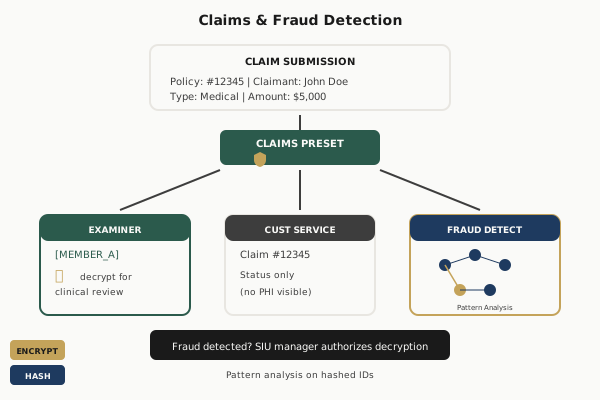
Solution: Deploy anonymize.solutions with insurance presets covering policyholder PII, health data (HIPAA), and financial information (PCI-DSS). Use role-based encryption for internal workflows and consistent pseudonymization for actuarial analysis. Enable secure third-party sharing for investigators and reinsurers.
1Health Insurer: Claims Processing Workflow
Context
A health insurance company processes medical claims containing diagnosis codes, treatment details, provider information, and patient identities. Claims examiners need clinical details for adjudication, but customer service should only see claim status. External medical reviewers receive de-identified case files.
Implementation
- Integrate anonymize.solutions API with claims management system (Guidewire, Duck Creek)
- Configure health insurance preset: member names, SSN, DOB, provider NPI, diagnosis codes
- Apply Encrypt method for claims examiners; full clinical detail access
- Apply Redact method for external medical reviewers; no patient identification
- Customer service sees: "Claim #12345 for [MEMBER_A]: Status Pending"
- Generate HIPAA-compliant audit trail for all PHI access
Use Cases
- Claims examiner reviews surgery claim; decrypts full member and clinical details
- External nurse reviewer assesses medical necessity; sees "[PATIENT], 45M, knee replacement"
- Member calls about claim; agent sees status and amounts, not medical details
Try Insurance Workflows Live
Claims processing with encrypted PII:
2Property Insurer: Underwriting & Risk Assessment
Context
A property and casualty insurer uses AI tools to assess risk from application documents, property photos, and third-party data. Underwriters need full applicant details for decisions, but actuarial models should use anonymized data. Reinsurance treaties require aggregated exposure data without individual policyholder identification.
Implementation
- Deploy Desktop App for underwriters processing application packages
- Create P&C preset: policyholder names, property addresses, vehicle VINs, prior claims
- Enable Chrome Extension for underwriters using AI to analyze property photos
- Apply Hash method for actuarial data exports; consistent IDs for loss modeling
- Apply Mask method for reinsurance: "Property in [REGION_A], value $***,***"
- Underwriter decrypts full details with personal key for binding decisions
Use Cases
- Underwriter uses ChatGPT to analyze flood zone; property address encrypted before AI
- Actuary builds catastrophe model; uses hashed policyholder IDs for clustering
- Reinsurer receives aggregate exposure; knows "500 properties in Florida" not addresses
3Multi-Line Insurer: Fraud Detection Analytics
Context
An insurance company's Special Investigations Unit (SIU) analyzes claims data to detect fraud patterns. Analysts need to identify suspicious patterns across millions of claims without seeing individual customer identities. Once a fraud ring is identified, investigators decrypt specific subjects for follow-up.
Implementation
- Integrate anonymize.solutions API with fraud detection platform (SHIFT, SAS)
- Configure fraud analytics preset: claimant names, addresses, phone numbers, bank accounts
- Apply Hash method for analytics database; consistent pseudonyms across claims
- Fraud analysts query: "Show all claims linked to [PHONE_HASH_A7F3]"
- Pattern identified → SIU manager authorizes decryption of specific subjects
- External investigators (law enforcement) receive Redact method output; no PII until subpoena
Use Cases
- Analyst discovers 15 claims share same masked phone number pattern
- SIU manager decrypts 15 claimant identities; confirms organized fraud ring
- Law enforcement receives evidence package; PII redacted until court order
Human Resources Data Protection
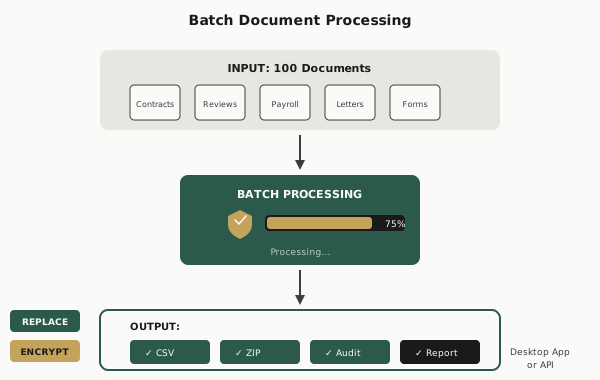
Solution: Deploy anonymize.solutions with HR presets covering employee PII, compensation data, and performance records. Use role-based encryption for management access and anonymization for workforce analytics. Enable secure sharing with external parties through time-limited decryption keys.
1Enterprise HR: Recruitment & Candidate Processing
Context
A large enterprise receives thousands of job applications monthly. Recruiters screen candidates, hiring managers conduct interviews, and HR processes offers. Candidate PII must be protected from unauthorized access, especially for internal candidates applying confidentially. AI tools assist with resume screening but must not store candidate data.
Implementation
- Integrate anonymize.solutions API with ATS (Workday, Greenhouse, Lever)
- Create recruitment preset: candidate names, current employers, salaries, contact details
- Apply Encrypt method for recruiters; decrypt assigned candidates only
- Internal candidates flagged as "CONFIDENTIAL"; manager access blocked until interview stage
- Enable Chrome Extension for recruiters using AI tools for candidate assessment
- Unsuccessful candidates auto-anonymized after 6 months per GDPR retention limits
Use Cases
- Recruiter uses ChatGPT to draft interview questions; candidate name encrypted
- Manager receives shortlist; internal candidate shows as "[CANDIDATE_C]" until HR approval
- GDPR audit confirms candidate data anonymized post-retention period
Try HR Data Protection Live
Employee data anonymization and compliance:
2Global Corporation: Performance Review Analytics
Context
A multinational corporation conducts annual performance reviews across 50,000 employees. HR leadership needs aggregate analytics on performance distribution, compensation alignment, and diversity metrics. Individual managers see only their direct reports. External compensation consultants benchmark salaries without individual identification.
Implementation
- Deploy API integration with HRIS (SAP SuccessFactors, Oracle HCM)
- Create performance preset: employee names, ratings, salary bands, manager feedback
- Apply Hash method for analytics; consistent employee IDs for trend analysis
- Managers decrypt direct reports with team-scoped keys
- External consultants receive Replace method output; synthetic names and roles
- Diversity analytics use aggregated anonymized data; no individual identification
Use Cases
- CHRO reviews performance distribution; sees "Engineering: 15% Exceeds, 70% Meets, 15% Below"
- Manager calibrates team ratings; sees full details for 8 direct reports only
- Compensation consultant benchmarks salaries; "[ROLE_A] at [COMPANY_X] earns [SALARY_1]"
3HR Operations: Exit Interviews & Offboarding
Context
An organization collects exit interview feedback to identify retention issues. Departing employees share candid feedback about managers, colleagues, and work environment. HR needs to analyze themes while protecting individual identities. Legal may need access for specific cases, but general analysis must be anonymous.
Implementation
- Deploy Desktop App for HR business partners conducting exit interviews
- Create exit interview preset: departing employee name, manager names, colleague mentions
- Apply Encrypt method for raw interview transcripts; HRBP key access only
- Apply Redact method for leadership reports; themes without individual attribution
- Legal hold triggered → specific interviews preserved with litigation hold key
- Annual retention: interviews older than 3 years permanently anonymized
Use Cases
- HRBP documents candid feedback; all names encrypted immediately
- VP reviews exit themes: "3 departures cited '[MANAGER_A]' management style"
- Legal investigation: counsel decrypts specific interview with authorized litigation key
Ready to implement your solution?
Our team can help you design and deploy the right anonymization architecture for your specific use case.